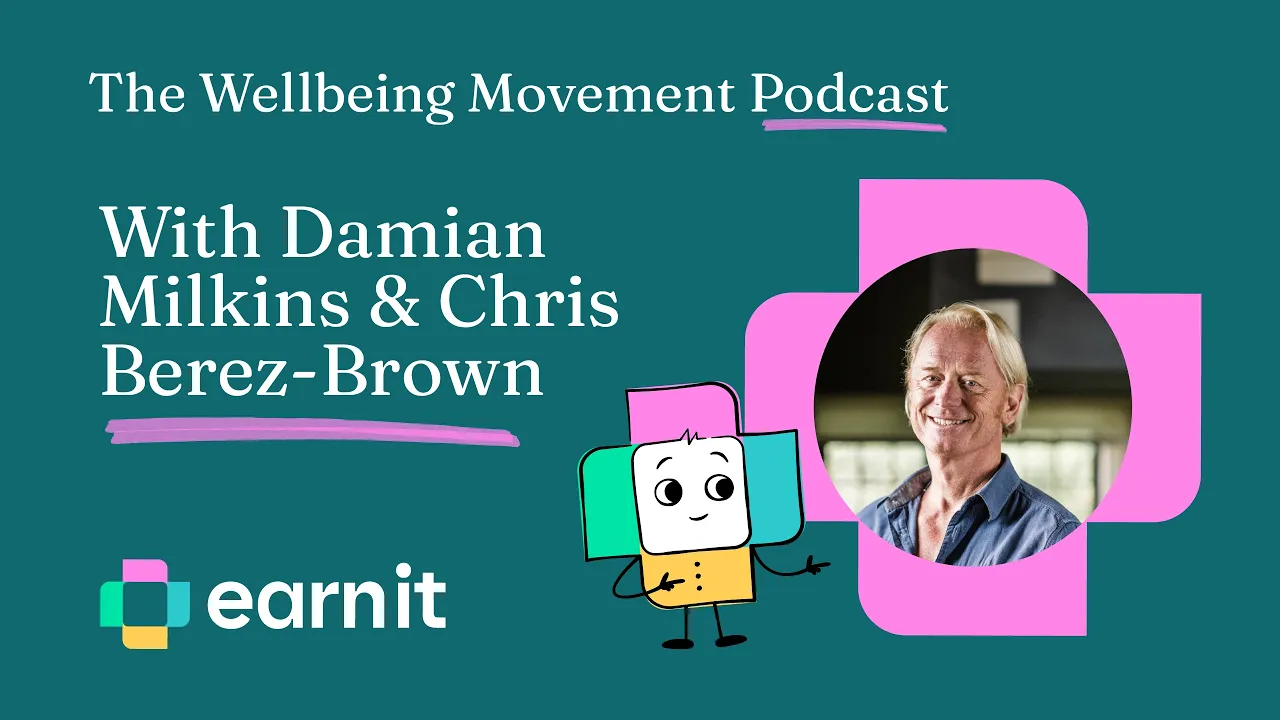
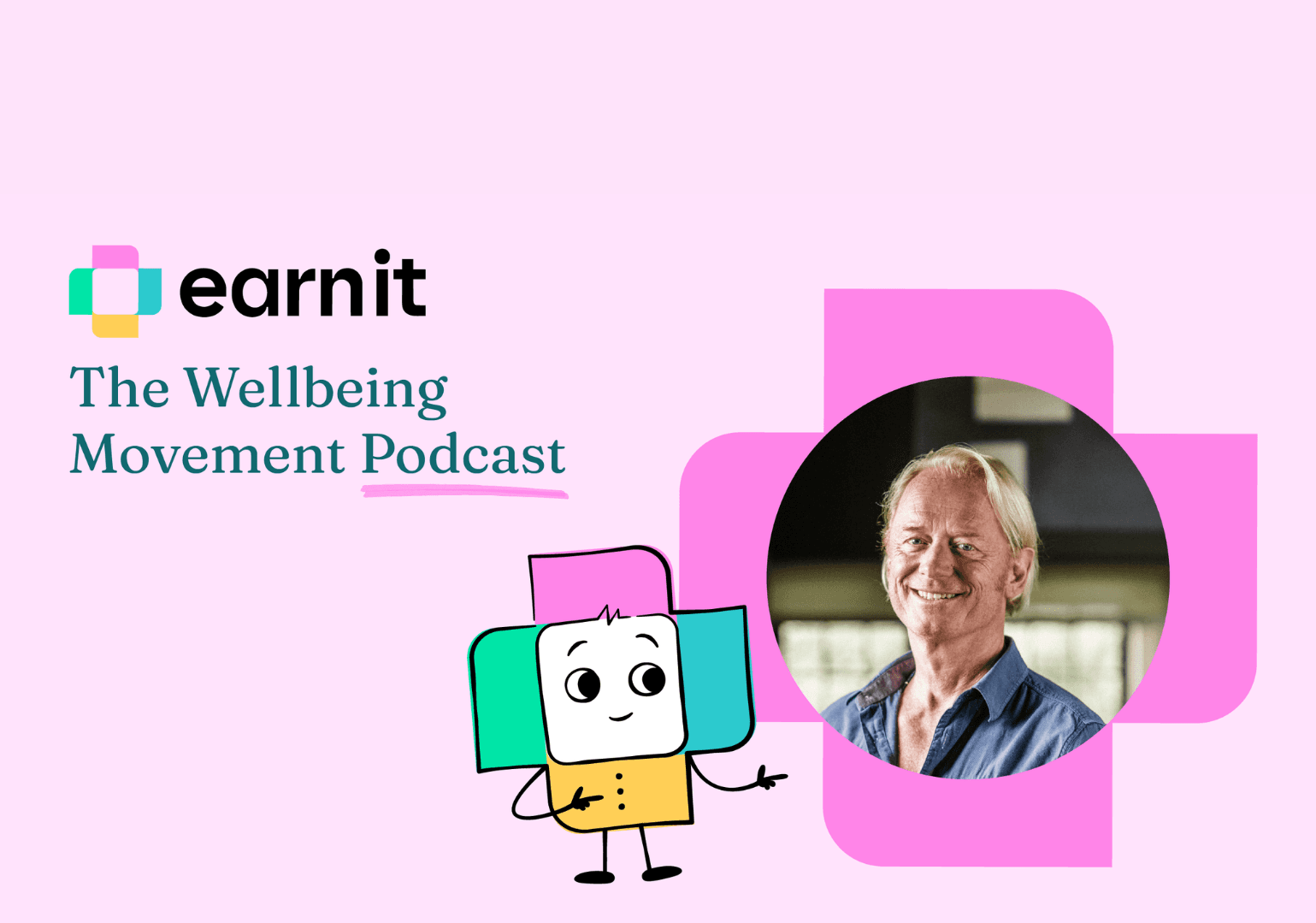
With Damian Milkins & Chris Baréz-Brown
Podcast
Written by
Published on
Chris’s work focuses on a simple idea: that human energy is a real competitive advantage - and when it’s right, work can feel easier, more creative, and even more fun.
Before founding Upping Your Elvis, Chris began his career in the British Army and later worked in brand management, and innovation consultancy.
He’s the author of multiple books on work, creativity, and living more consciously - including Upping Your Elvis, Wake Up!, Free!, and Shine.
He’s also co-founder of the app Talk It Out, ‘an emotional intelligence’ agent which helps people clear their head and get perspective.
TRANSCRIPT
Damian:
Here’s the problem.
Damian:
Leaders aren't addressing energy in the office and they aren't putting people
(Music)
Damian:
I'm really delighted to talk to you, Chris, this morning.
Damian:
Our mission at Earn-It is very much aligned with your own. We talk about helping people regain their mojo by helping them build healthy habits.
Damian:
And obviously, have some joy and fun along the way.
Damian:
And that really supports the work that you're doing.
Damian:
Chris, I'd like to start with talking about energy, which clearly is a topic that you know a lot about. So for anyone new to your work, what does getting your energy right mean and why should companies care about it?
Chris:
Yeah, well, it's... We all know what it's like to have our energy right, don't we? Because when it is right, life is easy and fun. And when it's not right, it's quite the opposite. So my belief is that what we should all be able to learn to do is learn how to tweak it regardless of the context in which we are doing stuff to make sure it flows better. In doing so, we will deliver better work, we'll enjoy ourselves, and life will be more technical. So that's the kind of the meta view of it. But obviously, there's lots of reasons why it's not so straightforward to do. And my specialism is helping people understand those and get the behaviors right to make sure that every day is absolutely pumping.
Damian:
And Chris, we've had some really challenging times, you know, with Covid, lockdown, hybrid working. You know, what are signs that a business's energy is off? Are there clear indicators?
Chris:
Yeah, well, look, I mean, I think you can walk into a business and you can tell what it's just like immediately. I was just... I was recently with a little media agency called Seven Stars. And I will never forget, I walked into that reception on... I've never met them before. I just sat at reception and went, "I want to play with these people." Because there was a vibe, right? You could hear people chatting, there was energy, people bouncing around. And equally, I walk into some offices and it feels like there's nothing there to play with. You know, people are just sat there, they're staring at screens. There's no interaction, there's no buzz, there's no sense of any collaboration whatsoever. Now, you know, those are palpable energy differences. And therefore, I think you can feel it very quickly. And I get the privilege of walking to lots of different organizations because I work with, you know, all sorts of other world. And you can just tell. But then you talk to the leaders, you talk to the people, you ask them some questions. And it becomes very obvious what their energetic setup is.
And the truth is, regardless of who you are and what you do, it can always be better, Daniel. We can always do better work to make sure that it is tuned to delivering more extraordinary results.
Damian:
Yeah, and that's really interesting. I mean, where does a company start, Chris? You know, are there things they could do immediately to get on this, get on the road? Or does everything sort of take a better time before you start seeing results?
Chris:
No, you can change energy almost instantly. It's actually quite a quick thing to do.
Damian:
That's got to be a win then.
Chris:
Yeah, yeah. Like us now, if we stand up now, we will feel quite different. It will change our energy quite quickly. Now, it doesn't mean to say it's going to stay in a great place. So you always got to play with it. But when I think about energy, what's important is that number one, you got to understand what I mean by that. So if I still ask somebody in Britain, how are you? The only allowable response is I'm fine. And the truth is, we're never just fine. There's a lot more going on for us than that. So I tend to break energy down to four component parts. If you're a massive hippie, there are seven. But four work quite well. That's your physical, mental, emotional and spiritual.
Now, by focusing on each one of those, you start to understand actually where you are at. So you have better awareness and then you can do something deliberately to change it. Now, obviously, we can change physical energy in an instant. Like I said, if we just stand up, if we breathe differently, if we do a little bit of exercise, that will change our physical setup very quickly.
But equally, over time, you can change your sleep patterns so that you can build things more foundationally. So some things take a bit longer, some things incredibly quick. But when it comes to a business, most of the issues that we have are down to our kind of, it's not necessarily our physical, it's often our mental, emotional, spiritual. And there are certain things that you can do quite quickly with those, certain things take a bit more effort. It kind of depends on the context of who you are and what you're doing.
Damian:
And is it harder, Chris, with these issues, with the economy?We deal with a lot of SMBs, small, medium businesses, and they've got lots of different challenges, getting people back to the office, how do you build a healthy culture? And then you've got economic challenges. It's tough out there.
Can you manage both the business need, but also the people need? I could certainly see it, but look, I've got to focus on the business. I've got to make that work before I start looking at the energy of the team. Or can you do both?
Chris:
Well, I have a very simple framework on this. Any business problem is a people problem. So if you're not focusing on the people, you're never going to solve things. And unfortunately, I've just come off a call with a business owner in Italy, actually with somebody who's connected to the event at the football club. And we just had a really interesting conversation about the fact that if you come from a traditional business point of view, you're all about optimization, you're about efficiency, you're about cost cutting, you're about... It's a very restrictive energy and it makes money a scarce resource and it makes success difficult.
If you focus on the people bit, however, and you create the conditions for them to be amazing, for them to really love who they are and what they do, the abundance of that type of approach means that actually all the financial success tends to come. But it depends on your framework and where you come at it. I'm people first every single time because they're going to be the people that are going to add the value and then we can put the business around them. One of my clients make the mistake of doing is this. They try and fit in with what business needs. Now, business needs everything 24-7. If you try and keep up, you'll have nothing left to give. So I advocate the reverse. I think we should make business fit us, the people. And the reason being is we're designed to be gatherer hunters. We have a more ancient design than business. Business is quite a recent construct in comparison. And therefore, actually, if we get business to fit us, it'll help us get better energy, we'll deliver better work, and then business will win too.
But you've got to take a people-centric approach to make that work. And if you think up until 12,000 years ago, we were all gatherer hunters, right? We are honed for that type of life and we thrive in that situation. Business is just a very different beast. We just cannot keep up with it. We've got this weird mentality, which is if I work a bit harder, if I pack more meetings in, then I'm going to succeed. You will not. What will happen is you'll diminish your energy and you'll end up doing pretty average work.
Damian:
So businesses really need to now take stock and focus on the people to get the business right, really focus on that culture, get that culture right. And is that applicable at any size of business? Can I do it with a five-man bang? Can I do it with a small team of 10 or 20? Is the same approach applicable?
Chris:
Yeah, we're all people, right? And actually, if you do have five or 20 people, lucky you, because you can change it immediately. I mean, I work with companies, 150,000, it's complicated, you know, and they're all in different regions. They've got different, you know, whereas actually, if you've got a small team or in a small organization like that, you can shift things in a heartbeat. It's completely different. And the other thing about that is, you know, if I work with a big company like Nike, which I do, Nike doesn't actually exist.
I know it sounds a bit weird, but it exists on paper, it exists in a brand. But actually, there is no homogenous culture in Nike. You know, they're all just different teams and they have a different culture in the different teams. And although you might join Nike, you stay for your team. That's where you set your behavioral standards and people's focus. So I don't actually work with big companies. I work with teams, you know, and actually, if I get them cooking, they will make sure the company wins. But it's the team where I focus. So therefore, if you have a business of five or 20 people, it's a team. It's a team. And that's where the culture lives and breathes anyway. So what a wonderful focus. You can get your arms around it. You can see if it's working or not. You can smell the energy when it's small, you know. So I love working with small organizations too, yeah.
Damian:
Yeah, that's brilliant.
And I mean, obviously, a lot of HR managers, heads of people I speak to, CEOs, they all say we do a lot. Yeah, we have lots of benefits, company benefits. We have, you know, the health care gym membership. We try and support the team. And we're doing everything we can. Are those things working? Are those sort of almost, you know, templated, box ticking benefits really working? And they're making the impact that's required for a healthy culture.
Chris:
They don't impact the culture, I don't think.So I think what they are is their table stakes.
Now, look, as a leader, I want my people to have a great environment. I want them to be looked after. I think that that's incumbent upon me to make sure I'm providing those things for my people. Otherwise, it's a sucky relationship that we have. And all businesses need to do that. But that won't make a great culture. What that means is that you're not a bad place to work at. And it means that people feel as if they're being looked after. That doesn't mean they're going to step up and be themselves at all. They're unrelated.
Damian:
Does that start maybe less around the benefits? Does it start with the leaders and that, I guess, the CEO, the leadership team? And if we look at that, what do you typically see, I guess, as sort of energy zappers within CEOs, COOs, and that sort of C-suite of leaders? Are they doing particular things? Are they getting it wrong in areas? Well, we all do, don't we?
Chris:
I mean, they're all human beings, like the rest of them. The challenge is they've got quite a tricky job. Because actually, when you're heading up an organization, you have all the pressure, right? Because you are working with, I don't know, shareholders or the actual owners or whoever it is that you report to financially, you've got them on your back constantly. You've got to create the conditions for your people to be amazing. You've got to look after the suppliers or the customers. I mean, there's a lot of stuff going on, right? So if I was to say, you know, yes, CEOs regularly get it wrong, it's understandable because it is a stressy place to be. But of course they're human.
And of course they make mistakes. And there are some CEOs who are just amazing, and they can actually manage all those concepts beautifully. But that's a superpower, if you can do that. Most of us will have some sort of blind spot. And we all know what it's like. You know, there are some leaders when they walk into the room, the hope disappears. We know these people, you know, they've just, they're just negative. They're just looking for all the problems because that's what they've been attuned to do.
And the problem is that when you're like that, you have a lack of awareness. You don't realize that the way that you're showing up is having such a marked impact on your team. And guess what? The team won't tell you because you're the boss. So you're caught in this terrible situation of actually, you know, being quite neggy, you know, bringing down the party, and no one's going to say, by the way, you've got to change your behavior. But actually, that's what we should be doing because it's incumbent on all of us. If we spot somebody behaving badly, we need to let them know because they won't spot it themselves. We're not designed to really understand ourselves that well because we perceive ourselves in really weird ways, you know, whereas our teams around us know exactly what mood we're in. They know exactly what we're doing to create the right conditions for work. And for me, one of the absolute truths around leadership is that as leaders, we create the weather.
Right. And what we need to do is be intentional about what weather we create because that weather will dictate the experience of our people. And if we just rock up in a bad mood or having a hard time or we haven't slept, we can't then take it out on everyone around us. You know, we need to make the weather work so that the business can flourish.
Damian:
I love that. I've made a note of that. Yeah, we come on the weather. I love that. That's put really well. I mean, I guess another thing we're seeing at the moment with leaders within businesses is obviously the economic pressures. Everyone's focused on the numbers each quarter and sort of annual targets.
At Earn It, we're very passionate about pausing. You know, we reward for things like time outdoors and breath work and mindfulness. How do how do leaders and also, you know, how have you bought that sort of pause and rest to your clients and projects? Is that through leadership or is there another mechanic?
Chris:
Yeah, it's only going to work when it is obvious through social proof that it is something that is encouraged, role modeled. It has the conditions created for it to support it. Otherwise, it won't happen. You know, if you if you go into, you know, say a big law firm where they are paid by the hour because they build by the hour, all of their structures is saying don't rest. You know, I want you look to your desk for billing money because when you see your desk, I'm making it and it's good for profit. So guess what? All the role models do that. Everyone does that in the company. You won't find them hanging out in a hammock garden at lunchtime. Doesn't happen, right? Because that's what they're obsessed by. It's all about utilization.
Now, in a business where you want to change that, the leaders need to visibly show themselves doing the same stuff. Now, if they understand why they do this, they'll do it. So very simple bit of data. You can only focus between 70 and 90 minutes at a time. Right. After that, you need 20 minutes rest to get your focus back. Now, very few leaders that I know put in 20 minutes rest. And by the way, when I say rest, I don't mean go to another meeting or do some emails. I mean, rest. Yeah. Which is why your work is so brilliant because what you're doing is you're rewarding people to do this through their day.
Now, now, if you just have back to back meetings because you're like utilization, no wonder it's hard work in the afternoon because you've lost the ability to focus. You've lost the ability to cognitively process what's in front of you. So so how do you get that happening in your business? Number one, you educate people so they understand why they're doing it. You give them an experience of it so they can feel the difference between having a rest and not having a rest. Yeah. And then and then you've got to make sure that people are wrong modeling that in the business.
Now, I've worked with lots of great organizations and great leaders. I've worked with Hershey's. There was a guy on the board of Hershey's every afternoon would take 20 minutes to meditate and he'd do it visibly in his office. Yeah. And it was a very simple thing to do because people were like, if he can do it, maybe I should do this. Yeah. But if people aren't doing that visibly, then you feel like the outlier, you're the freak, you know, you'll be the one breaking the rules. You want people to just go, here, it's encouraged for me to play with my energy in my way. And the truth is, there are certain things that we know that we should all do, like resting. But there are certain things that are very pertinent to you, Damien.
There are certain things that will get your energy working well and it's specific to your setup. So you've got to also be able to create the conditions for people to experiment and work out what works for them and deal with their energy in an individual way. Right. And therefore, one size does not fit all with this. And therefore, I, you know, I love companies where they go, you know, you just be you. As long as you think of your work, you find out how you do that best. And I also call you.
Damian:
Incredible. It also makes complete sense. Do you do you feel leaders will embrace it? Are they brave enough to embrace this, you know, even the 90 minutes and 20 minutes, this, you know, find your own approach? You know, are you seeing that?
Chris:
Well, I do see it. But you know what you have to understand is what we're working against. Right. So part of that gathering hunter design is that we have an inbuilt negativity bias. So, you know, 20,000 years ago, if I saw a bush rustling in the distance, I wouldn't go over to it, go, oh, I wonder if it's Damien coming back from a berry forage. I'd get my spirit and go, ah, it's going to eat me. Right. And, you know, nine times out of ten is you. But the one time it's a carnivorous beast, I'm delighted. I actually negatively. Right. It's part of our survival instinct. Now, today, we're not worried about beasts eating us. We're worried about anything new, anything different. We're worried about change because change is potentially dangerous because guess what? I live like this. And I survived. If I do something new, oh, there's risk. So implicit with every leader in their head, if you get them to do new and different things, there's a bit of them going, ah, it's going to eat me.
That's just that's just a reality. Right. And if they're under pressure, which everyone is, as you rightly say, quarterly reporting, numbers, numbers, numbers, then they're already in a stress response. Right. So that that negativity bias is primed to go off. So, of course, people would prefer to just keep doing what they've always done and hope and pray they'll get better results. But we know that's a nonsense. If you just keep doing what you've done, you're just going to keep going on that same hamster wheel. So, implicit with any leadership work that I do is helping them understand this is my design. This is why I resist change. But what's the cost to me and my business of doing that? And actually, how do I experiment in a way where there's very little risk, but massive upside? And I when you get people into that framework, then they'll go for it.
Damian:
Yeah. And it's also I mean, I guess there's challenges around that adoption, but also maintaining it. You know, we we work with a massive organization that put a fabulous gym in and studio for the team and a canteen. And it was really interesting. The CEO was going to the gym. So everyone was going to the gym at whatever time in the morning or afternoon. As soon as they stopped going, everyone else stopped going because of the peer pressure of sort of hold on your own in the office twice a week, three times a week. And the time you're in, you're going to the gym at, you know, two, three in the afternoon. So really interesting around sort of the adoption, but also maintaining that from a from a leadership perspective.
Chris:
Yeah, that's a classic. By the way, when I started work, everyone smoked because the CEO smokes. That's the only time that stopped, thank God. But but those sorts of things go on in businesses, right? So the weird thing is that people just don't talk about it very much, you know, so if they were to articulate or went to the gym at the beginning, I really liked going to the gym. really like going to the gym. Why did you go while the CEO is there and we just spent all this money on some new equipment above all, you know, now, it doesn't give you quite the same kick. It's not so exciting. It's not so new. The CA is not there. Having a conversation about what stops people is really interesting. And part of it will be the CEO's role modeling. Part of it will be I got bored, actually, life smooth done. And what I know about culture change, and I have done massive culture change programs with huge businesses all around the world, and I've been doing it for over 30 years is that culture change is quite easy to start stuff. It's very difficult to sustain it. That's the truth. Because what happens is when we were working, we live most of our life on autopilot, you know, so we just keep doing the same odd stuff day in day out without question it because it's a way of saving energy. So we love habits and routines. So I can get people to adopt a new behavior when they're conscious when they're awake, which I can wait, I can wake them up really well. But when I step out of business, they'll go back to sleep again.
Right. And they'll start adopting the old habits and routines. So when you're doing any type of culture change, you have to see it as a campaign. Right. And it's, it's a bit like Netflix, if you get a Netflix series, right? They are short, they are punchy, they are entertaining, you know, they take every barrier out of you paying attention to it as they possibly can, you need to do the same when it comes to change within a business. Because what you're fighting
for is their engagement. And guess what, if it's not entertaining, if there's not something in it for them, some sort of benefit, if it's not easy, forget it, it's over. Because you know, that's the way the world works these days. And unfortunately, you know, unless it's sexy and fast, we're not interested.
Damian:
Yeah, such good points. I've got to get you Chris on to earn it. And you can tell what you think. So I think we've touched on a few things there that really deliver. So to just on change, Chris, I mean, you've had an incredible career really colourful. I'd love to go for a coffee with you one time. Now looking at upping your Elvis, it started back in 2010, I believe. How is the workplace because obviously, it's changed a lot since then. How has it changed? Is it getting better? Is it getting worse? Are you seeing it just stagnant? What are the changes you've seen since 2010?
Chris:
Well, in some ways both, right? Because that's just the nature of change. I mean, there's been more in the last 15 years than before, right? So you know, through Elvis's journey, gosh, we've seen a lot. Some things are decidedly more challenging. I think human connection is at risk. And this all came from COVID, when we all started to do remote working, because we had to. And the way that people have adopted coming back to the office has been varied, shall we say. And I think there is no substitute for being around people informally when you are working. Because we actually need relational energy, you know, it's a big part of who we are. And therefore, we need to structure that into our work. Well, one of my clients is a big broadcaster that everyone will know. And they will say, Oh, you know, we've lost all our energy, you know, we've got this kind of flexi working, they can come in, we want them in like three days a week. And I'm like, look, I'll tell you what, make one of those days Monday.
Just get everyone in on Monday altogether, non negotiable, start the week together. And actually, if you can do Mother Tuesday, Wednesday, and then they remote work Thursday, Friday, fine, but at least we hit it hard. And we've got time to play with each other and having formal communication. And it makes such a difference. So Monday's key, Chris. Ah, look, this kind of, you know, we work at home Monday, Friday, that's just extending a weekend energetically for most people, you get really floppy engagement. And, you know, I know that there's a lot of things we can do brilliantly on our own. Don't get me wrong, I'm a massive fan. I know, I spent a lot of time working on my own.
But there is no substitute for being with my team physically, when we are starting the week to get connected to what's important, to support each other and coach each other on where we should focus to help each other with difficulties to actually connect on people's lives. You know, because actually, if you're gonna do great work, let's not just think about the work together, let's think about how we are, and what we need to do to support each other socially as well. And you can't do that as well remotely, you just can't. It's a very different thing. You know, I'm loving talking to you now, but I'd love to be in your room with you.
I really would, because we'd have a different level of connection. And that's just part of our human setup. So that bit is certainly more challenging. I think, you know, with the tech coming in with, you know, I mean, I love AI, I love what it can do for me. I love the speed of change. I love, you know, there's so many great things happening right now. But, you know, the human being is often being left behind a little bit. And that's something we just got to keep a focus on.
Damian:
Yeah, it's really interesting. One of the key features in our in our app is, is users checking into the office, and consistently earning streaks or checking into you know, gyms and healthy locations. I mean, you know, the discussions I've had, you know, with HR leaders, is how do they how do they incentivize people to come into the office? They've they've done things like sort of free canteen or a particular events or, you know, have you seen things that work and maybe other things that don't?
Chris:
Well, I mean, there's two there's two, you know, polarizing viewpoints on this one. Why is you making a honeypot? You know, the office is a honeypot, everyone comes in because they really want to go there, because there's things there that they can't get anywhere else. You know, I'm not sure that's true. I mean, I, you know, I can find gyms anywhere on the planet, probably better ones than I've got in the company. And you know, I quite like to work out with people who aren't in my team. So, you know, the honeypot thing, yes, it needs to be attractive, everything, but it won't do the job of motivating people to get in on a Monday morning. This is why. So, you know, my view is, this is a leadership initiative, tell people, your job is to be in on a Monday. That's what we do. It's a behavioral standard. And we don't let people show that.
And yeah, I like flexible working. I like the fact that we can spend most time with our kids. And you know, we can work out what we want to. That's all very cool, indeed. But that's not get the social connection and the culture to pay the price, just so that we can have a more flexible life.
Damian:
Yeah, great stuff. So Chris, you recently posted on LinkedIn, a really interesting thought leadership piece on the impact of AI and job roles. You got a load of likes, lots of engagement, clearly, it resonated. Can you talk a bit more about that sort of how we can leverage AI for the good, rather than actually replacing people and changing the workplace?
Chris:
Yeah, well, people will be replaced. And that's just happening. I mean, it's already happening, isn't it? What you know, one of my clients, 55% of their workforce have been laid off between now and Christmas. Oh, it's punchy stuff. So yeah, there's gonna be masses of change. But, you know, humanity evolves through, you know, technical advances. And this is the biggest we'll ever see. So so it's all about how do we engage in it? And how do we use it best to our advantage? And obviously, if you if you're inflexible as to how you add value and inflexible as to how you work, then this is gonna be a tough time for you.
You know, because, you know, the AI is going to be doing a lot of the stuff that you know, we used to have a lot of people doing, you know, it's pretty straightforward, you know, I mean, you know, basic legal stuff and accounting stuff, I mean, you know, why why would we pay, you know, for those services anymore? So so it's going to change. But you know, I personally think it's going to be remarkable what it can do for us. And, you know, personally, my whole life has changed from from using AI in very different ways.
You know, it's fantastic for, you know, getting stimulus and insights and moving things forward further faster. It's interesting that a lot of people now are overwhelmed by the amount of choice they have, or what they're really suffering is they can't make decisions. Because AI is so generative. People are just being overwhelmed by, you know, how much is going on. So interestingly, I think we have to learn some new skills. I was just talking to a big advertising network recently. And they said, Look, AI, you know, we thought it would make life easy for us. But what it's done is it's taken the easy work. And now we've got the hard work today. And actually, people just can't choose, I've got all these options, which one's the best one.
And there's a lot of overwhelm as a result of it. So we just got to learn how to work with it. And you know, it's a bit like, you know, when mobile phones came out, we had to learn how to not look at them all night long when we're at home. And some people still struggle with that, we need to learn how to make AI fit into our lives. And I'm not a fan of this. Let's turn back time and let's get rid of tech, because tech is brilliant for humanity. But we've got to learn how to change our relationship with it. That's for sure.
Damian:
Yeah, yeah.
And Chris, I mean, I mean, you're very passionate about supporting and building a healthy relationship with the workplace. Is AI going to disrupt that even more? We've seen, you know, challenges around lockdown and hybrid working, getting people back, raising energy levels is AI another disruptor, potentially, if you don't use it in the right way.
Chris:
Oh, absolutely. Yeah. I mean, for sure. Well, you know, just like that advertising network, you know, they are having a completely different, you know, experience at work now than they were, you know, 18 months ago, it's completely changed. You know, coming up with, you know, great decks, big deal, I can do that in five minutes now, you know, I don't spend all day at working on it, it's a completely different world. And therefore, you have to have sharper thinking, you've got to be more creative, you've got to, you've got to really bring more of the humanity to play, to have an impact these days, because that's the thing that it can't replicate.
And in my, in my piece, what I was saying was that I don't think it's going to, you know, it's not going to replace leaders, because we still need leaders. But what it does do, is it shines a big light on the ones that can't do what we would traditionally call the softer skills. Because because actually a lot of leaders get promoted, because they're good at doing the work, the work's being done now. So you know, that can't be your position of, of authority anymore. You know, what the only thing really, that you've got as a leader is to be brilliant with your people and understand how to unlock their genius. And that is something that AI will never do quite the same as we will. Now it's getting closer, by the way. So you know, watch this space, because, you know, what is available now for people being coached at work to understand what's going on in their head. I mean, it's pretty incredible, the advances in the last just three months.
Damian:
Yeah. So, so Chris, does that mean you need to be a bit of an authority on AI? I guess when you when you when you approach a client or a project, your energy labs with a big multinational, clearly AI at the moment is there and plays a role, but obviously as it becomes more prominent, is that does that mean you need to have that as a key factor? So I look at the energy of the team, I look at, you know, driving people back to work, I look at the geographies, the culture, but also the use of AI. Is that? Is that something you're looking at closely?
Chris:
Well, not that close. I mean, I've got I've got an AI tech startups, I'm quite in that world anyway. So I do understand it. But but what I don't do is, and some people, it's quite surprising, I don't go in and audit companies, I don't do these big assessments before I work with them. Okay, I don't, I used to, I did all that. And I charged hundreds of thousands of pounds to do it. And you know what? waste of time. Waste of time. Every company goes, Oh, we're so different. We're not like anyone else. Rubbish. You've still got people working for you. And guess what? People are people. We're all the same. Yes, there's going to be a bit of a nuance about your culture and about the way you're structured and blah, blah, blah. But you know what, we're all way more similar than we think.
There's something weird about about our design. And this is a kind of tribal survival thing, which is, you know, we stick to people who are like us, you know, and everyone else is wrong, but we're all right. And we're different. And actually, the truth is, we are much more alike. And we agree on more things than we ever imagined. And actually, there's more similarities across businesses. And there are differences way more. So I go in there, I just say, well, what's showing up today? You know, who are you today, David? What's going on in your life? That's way more important than any big assessment I can do of a culture. And it's way more human and real. Yeah.
Damian:
So if I was a I wanted to engage in your services, I was keen on upping my energy levels, maybe I've got particular challenges with different teams. Your approach is not to do this sort of initial piece of work or sort of an audit or it's just to get in and what start start speaking to the team and
Chris:
Do some work. Yeah, it just get people experimenting, try some things out and see what works. And I'm a huge fan of experiments because our energy is always changing. As you said, you know, the world has changed massively for the last 10 years. And therefore, you know, the context in which we deliver value has changed. So you can't do the same as we did in 10 years ago, because it will not win. So that's changing. We're changing constantly. You know, every day I wake up, I'm a slightly different person. Well, evolving. So you cannot say, Oh, it worked for me last year.
So I just keep doing it. We have to evolve constantly. And therefore, the way you do that is you experiment, you try one new thing out a day, just one thing, it might be the way you run a meeting or the way that you you rest, as you say, in an afternoon to get your energy back, just try one thing out and say, Do I now feel better and adjust if you have I delivered a better day? When I go home tonight, have I had more meaning as a result of that experiment? And what the most important thing is, you know how to experiment and you know how to add value, but you know what good feels like.
Now, most people don't know if I say to somebody, somebody, I say, so how's your day? No idea. That's what they say, because they're so busy, they're back to back to back to back to back.
Damian:
And they don't create. So that's a bit frightening, Chris.
Chris:
Man, it happens so often. I mean, you know, when you go back to back meetings, you could only be on autopilot. Yeah. And therefore, their consciousness and their awareness is rubbish.
Damian:
I have to say, I'm guilty of that this whole sort of, you know, I guess, you know, more I do more I cram in, I must be more productive. But you're right, you just get
Chris:
I mean, it's a classic viewpoint. You know, I see this everywhere I go. And David Hyatt, who does the do lectures, great guy, you know, he, he found a quote from a photographer somewhere, which he shared, which is, you know, busy is easy. You know, and actually, Tim Ferriss takes it further. He says busy is lazy. Chris I don't agree. You know, when you're back to back to back, you don't have to think you literally rock up every day, you look at your diary, what we got next, or guess that, you know, you pop out the end of the day and go, wow, I felt so productive, because I've been running around. And I get this big dopamine kick. But you're busy doing all the wrong stuff most of the time. You know, there's this lovely piece of research that suggests the most successful people in all walks of life, entrepreneurs, musicians, athletes, they work for between three and a half and four hours per day.
But they use absolute focus. They use their sweet spot of intentionality, which we will have, but we you know, it's quite limited. And they do it on what counts. And the problem is that most people, you know, if I go to a business, I say, right, what's your big thing today? What's the most important thing you have to deliver that's going to create legendary impacts. And when you go home, you'll be high fiving. Yeah. Oh, well, I've got that. And like they got a list of 10 things. Well, no, no, no, the one thing.
And people can't do this. They can't prioritize. Yeah. And if you can't prioritize, there is not a hope you will get off that treadmill. You're Chris always going to be going, I need to do more, I need to do more, I need to do more, because that is your only way of winning. And if your only way of winning is to work harder, and do more, my suggestion is, you're never going to win.
Damian:
Listen, Chris, this has been massively insightful. I've already taken too much of your time. I really appreciate, you know, your insight. I mean, you've got a wealth of experience. One last question from me. So, earn it believe that an individual's well being should be supported by a collective. So different people in our lives, and that changes as, as, as we get older.
What role is your workplace, your employer? How important is that? Obviously, we spend so much time at work. You know, clearly, you're saying those benefits, those sort of tickboxing. That's not enough. How important is is your employer in regards to your overall well being?
Chris:
It's massive. It's massive. There's one of my favorite books ever, I've read a business.
And I don't say that lightly. I've read a lot. It's by Johann Hari. And it's a book called Lost Connections. And it's actually a book that's all about anxiety, depression. And it's the basic ethos is if you lose these nine different connections, you will become more anxious and depressed. But equally, if you have them, you will be well. And, and one of those things is meaningful work.
You know, work, producing some type of meaningful impact on a daily basis with the talents and skills that we have is vital to our well being. Yeah, so works in person. But also, there's all that social connection, which is another one of those connections. So when in work, you have relationships with people, you know, and those are really important to us and our well being. So that's important. And then of course, there's all sorts of amazing initiatives that can go on in work, you know, we, we get to grow when we're at work, which is vital for us. You know, we get to shape our daily context in a way that fits who we are. That's really important. There are so many things that come through work. And then of course, you know, there are there are things that employers can do.
So you know, my tech startup that I mentioned, which is which is AI based is called TiO. And it's a walking talking technique, you you talk into your phone to help get more clarity, which is which is a challenge most people have. And it's AI based. So basically listens to your emotional intensity of what you say, and therefore it pulls out the things that most important to you. Now, that's paid for by companies, companies are buying that for people, just that you know, they're buying earning, right. So so without the company investing in these things, a lot of people would not have support. And it's sad to say that, you know, there's over a billion people on this planet with the mental health challenge right now, two thirds will not talk to another human being.
Now, if a company can actually overcome that issue, and give people a meaningful outlet to look after themselves better, that is making this world spin better. And you know, we have a lot of clients who invest in TO to help their people with that as they do indeed with early. So companies make a big, big, big positive impact on people's overall wellbeing.
Damian:
And to be clear that TO talk it out. That's an app on the App Store, I could go download it now, I have to get it through my company.
Chris:
It is now, you can get it on the App Store. Because we've got we got kind of lots of people who use it who don't do it through a corporate setting. But you know, it's just one of those things that we put out there because, you know, bizarrely, you know, you're five times more likely to talk to a machine than a person. Okay, so so you know, it would be great, wouldn't it if we can all sit around and actually share honestly about what's going on in our lives, but so many people are resistant to it. But chatting into a to an app, you know, you're not being judged. It all stays on your phone. No one ever hear it. So it's totally safe. You'd be really, really honest. So it's a useful thing to be able to have. I would never say it's a replacement for social interaction and talking to your friends and your family. But it's a great thing as an add on as a benefit as well.
Damian:
Awesome, awesome. So thanks so much. Really appreciate your time and insight. Yeah, it's been obviously colourful. Really appreciate it.
Chris:
Well, it's been a bit of pleasure coming on, Damon. Look, good luck with your work. It's important.
Damian:
Yeah, thanks so much, buddy. All right. Take care.
Share this page
Whether you’re an employer, sponsor or retail partner, get in touch to become part of the Earn It wellness world.